Una línea de ensacado que pone 500 g en un saco y 515 g en el siguiente no es un inconveniente menor. En un turno de 10.000 bolsas, un sobrellenado del 3% regala silenciosamente cientos de kilogramos de producto. El mismo turno también produce bolsas insuficientemente llenas que un control de calidad detecta, y cada una de esas bolsas se convierte en una queja o una devolución. Existe una máquina empacadora automática de gránulos para dosificar, formar, llenar y sellar en un movimiento continuo. Cuando el peso se desplaza o el sello falla, la causa raíz no suele ser una falla misteriosa. Es una discrepancia entre el principio de dosificación y la forma en que se comporta su gránulo con la humedad de producción.
Lo que realmente hace una máquina empacadora automática de gránulos
un empaquetadora automática de gránulos toma gránulos que fluyen libremente, los dosifica por volumen o peso, forma una bolsa a partir de rollos o toma una bolsa prefabricada, la llena, la sella y descarga una bolsa terminada una y otra vez.
La respuesta corta es: la máquina es un problema de dosificación envuelto en un embalaje. La bolsa es secundaria. La temperatura del sello, la tensión de la película y la sincronización de la mandíbula tienen que ser correctas, pero sólo importan si la dosis dentro de la bolsa es la correcta. La misma clase de máquina procesa sal, azúcar, arroz, semillas y piensos granulados. Lo que diferencia una línea suave de una ruidosa es la tolva, el cabezal dosificador y el ajuste del llenado.
A nivel práctico, la máquina tiene que realizar bien tres trabajos al mismo tiempo. Tiene que entregar la misma cantidad de producto en cada ciclo. Tiene que formar una bolsa sin arrugas ni fugas de sellos. Y tiene que hacerlo a una velocidad de ciclo que coincida con su objetivo de turno. Si uno de esos tres está desequilibrado, los otros dos no salvarán el día de producción.
Volumétrico o gravimétrico: qué principio de dosificación se adapta a su producto
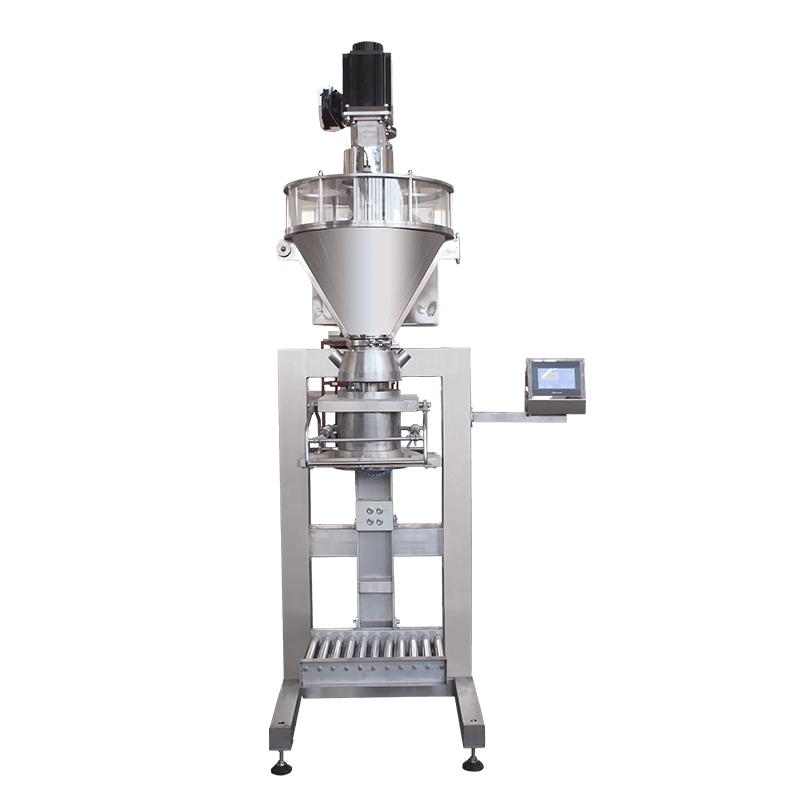
La dosificación volumétrica con vaso medidor es el método clásico. La taza se llena hasta un nivel determinado y se vierte en la bolsa. Las máquinas basadas en copas como la MP5000DS ofrecen altas tasas de ciclo y un servicio sencillo. Funcionan mejor con sal, azúcar, arroz y otros gránulos cuya densidad se mantiene estable en el suelo de la planta.
El problema aparece cuando cambia la densidad aparente. Un día húmedo aumenta el contenido de humedad de la sal. Esa humedad reduce la masa aparente en la taza. Si el mismo vaso ahora contiene un 2% menos de masa, cada bolsa que sale de la línea está insuficientemente llena. Un llenador volumétrico no puede ver ese cambio.
Los sistemas gravimétricos pesan antes de llenarse. Una pesadora neta de cabezal único o una báscula combinada de cabezales múltiples responde al cambio de densidad. Cuestan más y ocupan más espacio. La regla práctica: si la tolerancia de sus clientes es estricta y la densidad de su producto varía, elija una báscula. Si utiliza un producto estable a alta velocidad, la dosificación en taza ofrece un menor costo por bolsa.
También existe el camino intermedio. Algunas envasadoras de granulado combinan un predosificador de copa o de tornillo con una controladora de peso final que corrige los últimos gramos. Ese enfoque mantiene bajos los costos de capital y al mismo tiempo reduce el riesgo de salirse de la tolerancia. No es tan preciso como un sistema multicabezal completo, pero es una opción razonable para una planta que está actualizando su sistema de llenado volumétrico puro.
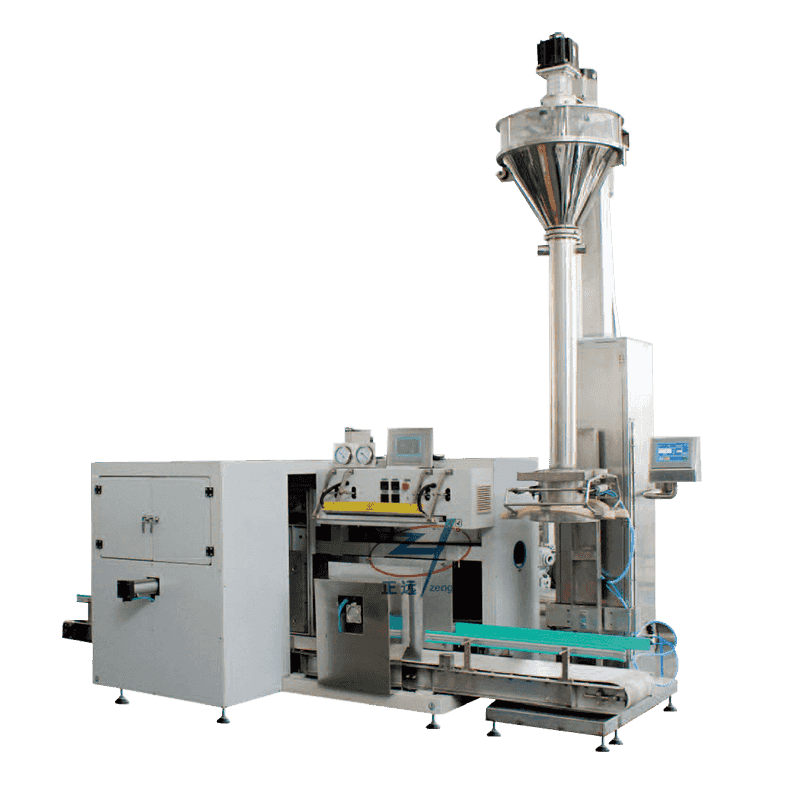
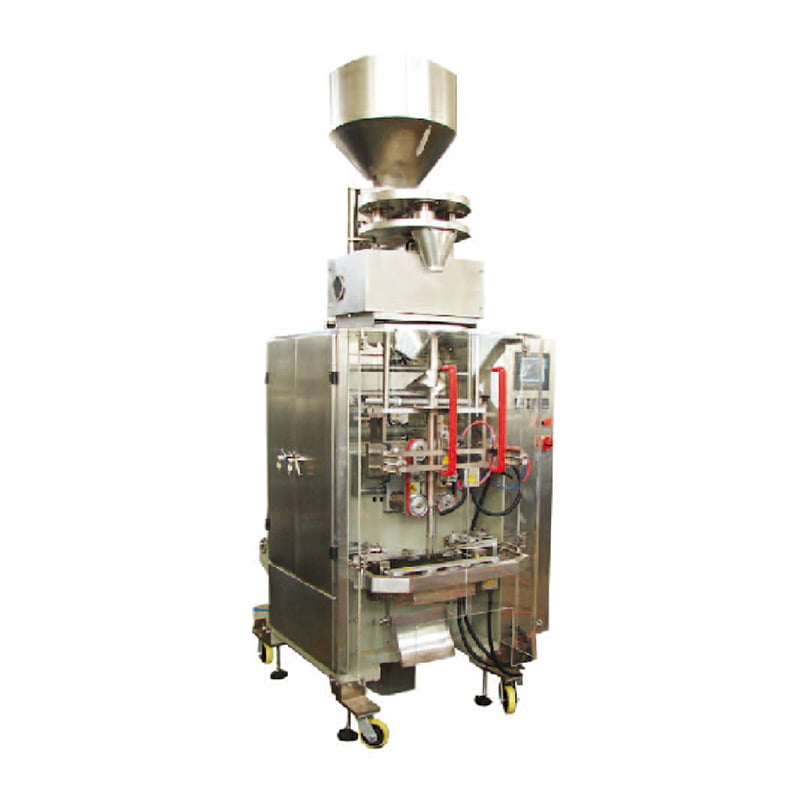 Máquina envasadora cuantitativa de vasos de alta velocidad para gránulos Esta máquina combina la dosificación por copa con la corrección automática de escala, ofreciendo un punto medio rentable entre el llenado volumétrico puro y los sistemas multicabezal completos para plantas que actualizan la dosificación básica. Ver producto →
 Una comparación práctica de los métodos de dosificación utilizados en las envasadoras automáticas de gránulos. | Método de dosificación | Velocidad | Precisión típica | Complejidad | Mejor ajuste |
| Taza (volumétrica) | muy alto | ±2 a 3% | Bajo | Productos de densidad estable como sal y azúcar. |
| Pesadora neta lineal | Medio | ±0,5 a 1% | Medio | Productos con densidad variable. |
| combinación multicabezal | Alto | ±0,2 a 0,5% | Alto | Gránulos mixtos y SKU de alto valor |
| Asistido por vacío | Medio | ±1% | Medio | Gránulos sensibles a la humedad |
Configuraciones de la máquina que verá en el suelo
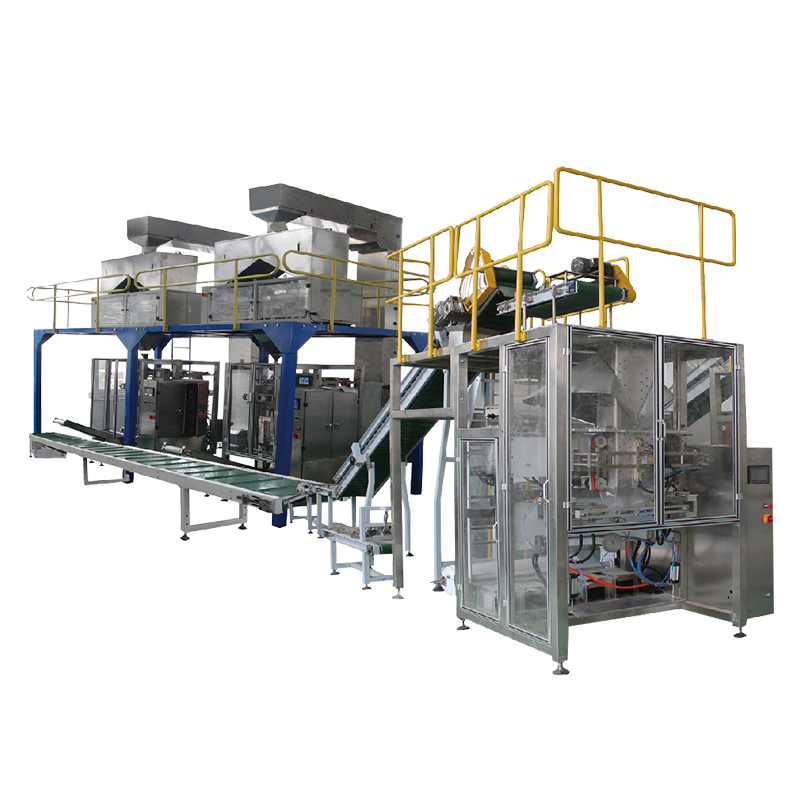
La configuración dominante es el formado, llenado y sellado vertical a partir de material en rollo. La película se introduce en un tubo formador, el sello longitudinal cierra el tubo y las mordazas transversales sellan el fondo, llenan, sellan la parte superior y cortan. Produce bolsas tipo almohada, bolsas con fuelle y paquetes tipo barra.
Las MP5000D, MP5000B, MP7300 y MP1100 de Mach Packing son máquinas envasadoras verticales automáticas integradas de gránulos construidas según ese principio. La unidad de dosificación, el formador de bolsas y la extracción de película están sincronizados mediante un PLC. Eso es lo que mantiene repetible el peso de salida. Las máquinas difieren en el rango de ancho de bolsa, la velocidad del ciclo y las opciones de control, por lo que la elección correcta depende del tamaño de bolsa que utilice y del rendimiento que necesite.
Aquí es donde muchos compradores se equivocan: comparan la velocidad de envasado indicada por la máquina en lugar de la velocidad de llenado de la unidad de dosificación. Si el sistema de dosificación no puede administrar una dosis constante dentro del tiempo del ciclo, la velocidad máxima del folleto no tiene sentido. Pídale al proveedor que le muestre el ciclo de llenado según el tamaño de su bolsa, no la velocidad técnica máxima.
Las máquinas de bolsas prefabricadas toman un camino diferente. Escogen una bolsa, la abren, la llenan y la sellan. La apariencia de la bolsa es mejor y las características que se pueden volver a cerrar son más fáciles de agregar, pero el material de la bolsa generalmente cuesta entre un 10 y un 15 % más que el material en rollo. Para un producto de gran volumen y bajo margen, la ruta VFFS de material en rollo suele ser la inversión más segura.
Cuando miras el Tipos de máquinas envasadoras de gránulos y cómo funcionan. , puede limitar su enfoque rápidamente. La decisión generalmente se reduce al costo de la película versus la apariencia de la bolsa y a la velocidad del ciclo que necesita por hora.
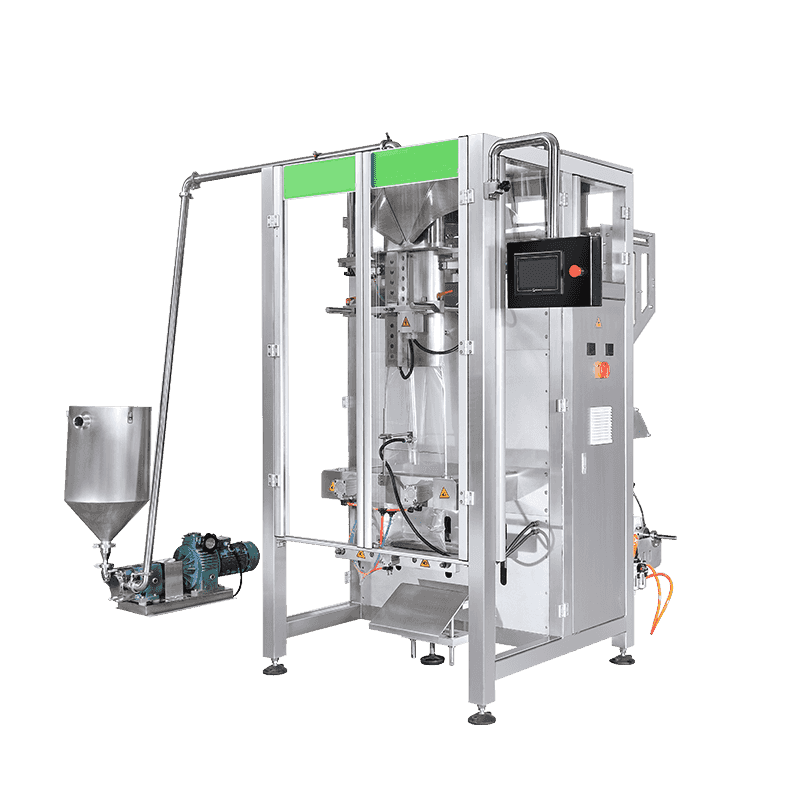
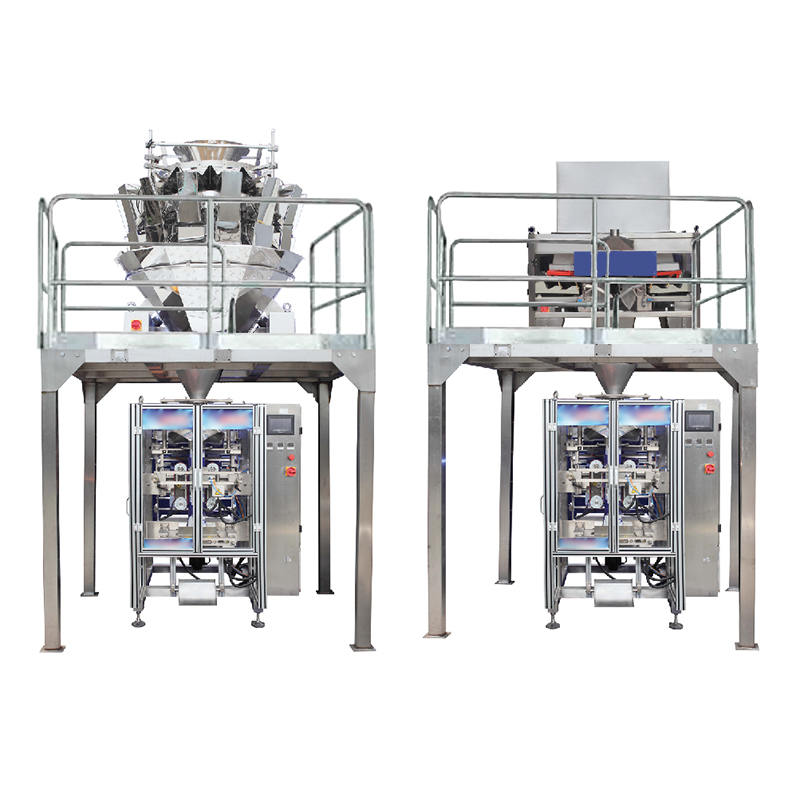 Máquina envasadora vertical automática integrada para gránulos de flujo libre Diseñado para sal, azúcar, arroz y partículas secas similares, este empacador vertical ofrece un flujo de tubo de formación limpio y velocidades de ciclo rápidas, equilibrando el costo de la película con la apariencia de la bolsa. Ver producto →
 ¿Qué productos granulados funcionan mejor en estas máquinas?
Los gránulos de flujo libre son el pan de cada día de las envasadoras automáticas de gránulos. Sal, azúcar, arroz, semillas, frijoles y partículas secas similares caen limpiamente a través del tubo de formación. Son rápidos y fáciles de dosificar.
Los gránulos ligeramente polvorientos, como las mezclas de especias y algunos aditivos para piensos, requieren una disposición de llenado a prueba de polvo. Un diseño limpio con película desplegable y sellado rápido entre mordazas reduce la pérdida de producto y mantiene limpia el área de sellado.
Los productos sensibles a la humedad, como las nueces, las frutas secas y ciertos alimentos para mascotas, se benefician del envasado al vacío. Las máquinas de vacío MP500N y MP500N2 manipulan gránulos y polvos. El ciclo de vacío elimina el aire, acorta el paquete y prolonga la vida útil. Eso cambia su selección de una simple empacadora vertical a una línea con capacidad de vacío.
Si utiliza varios productos en la misma línea, el tiempo de cambio es importante. Un tubo formador de liberación rápida y una HMI con recetas almacenadas pueden reducir el cambio de 40 a 10 minutos. Tras un mes de tiradas pequeñas, el ahorro de tiempo es significativo.
Un punto que vale la pena comprobar es la película que piensas utilizar. Algunos gránulos tienen bordes afilados que desgastan el interior del tubo formador. Si su producto es abrasivo solicite un tubo formador endurecido o una película con mejor resistencia a la perforación. Ese detalle no aparecerá en la hoja de datos de la máquina, pero afectará la frecuencia con la que se reemplazan las piezas.
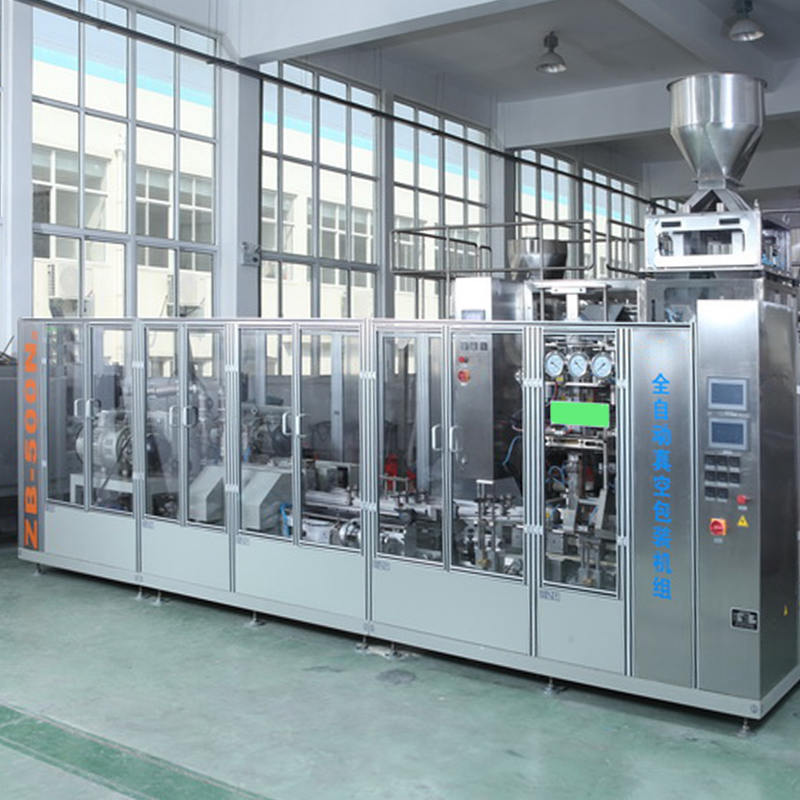 Máquina automática de envasado al vacío para gránulos y polvos Maneja materiales granulares y en polvo en un formato sellado al vacío, integrado en una cadena de producción completa que incluye manejo de materiales y empaque secundario. Ver producto →
 Cómo encaja la máquina en su línea de producción
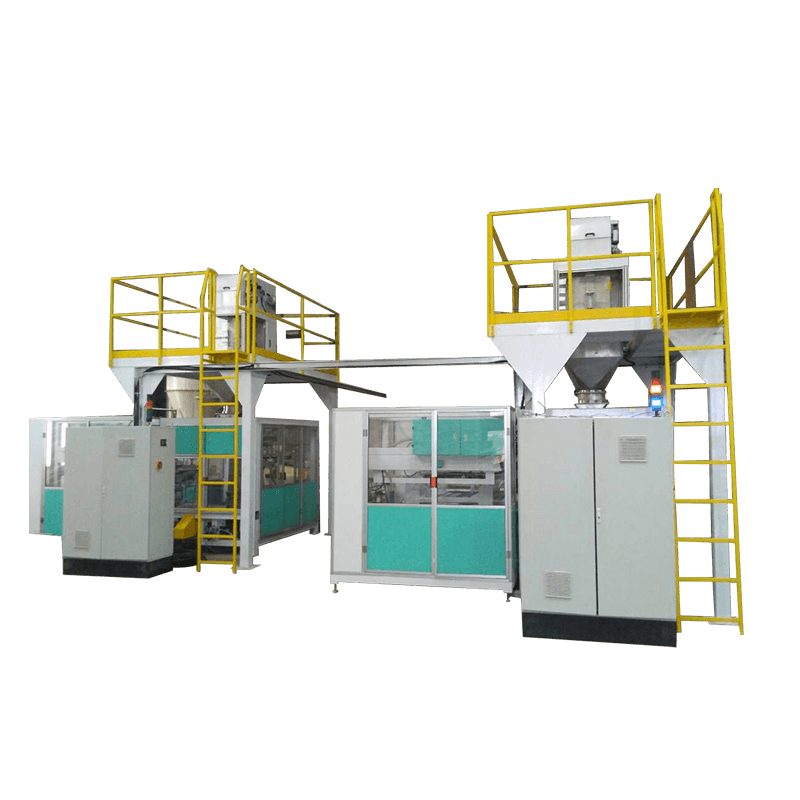
un automatic granule packing machine does not run alone. It sits in a chain that starts with material handling and ends with secondary packaging.
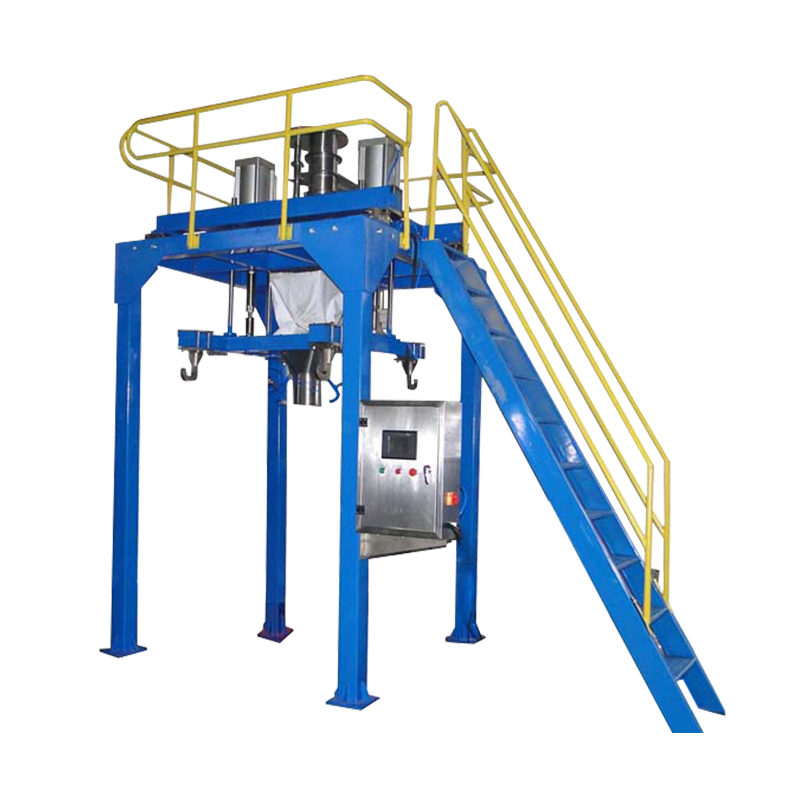
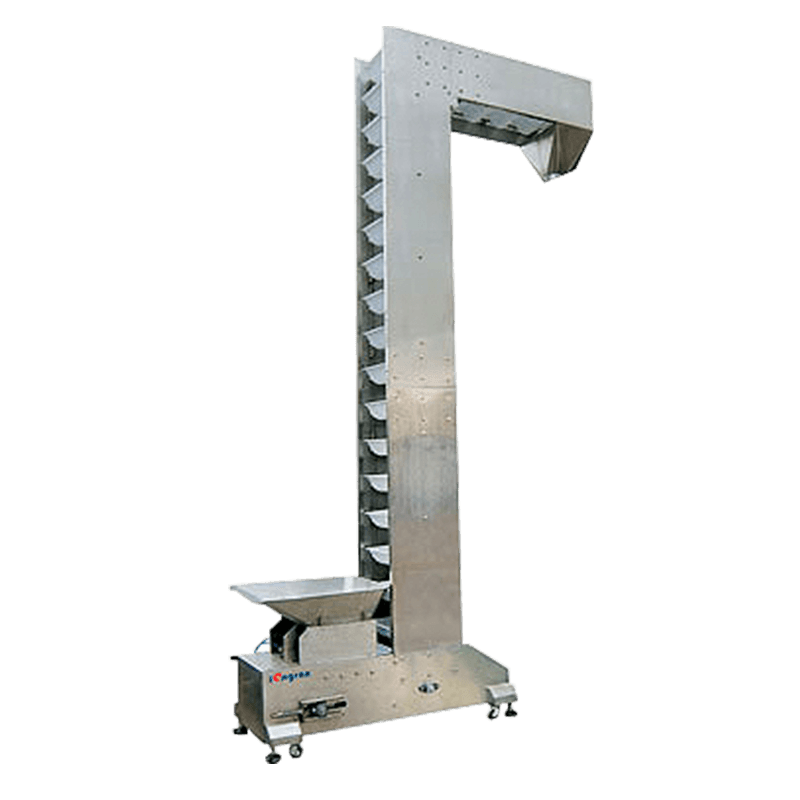
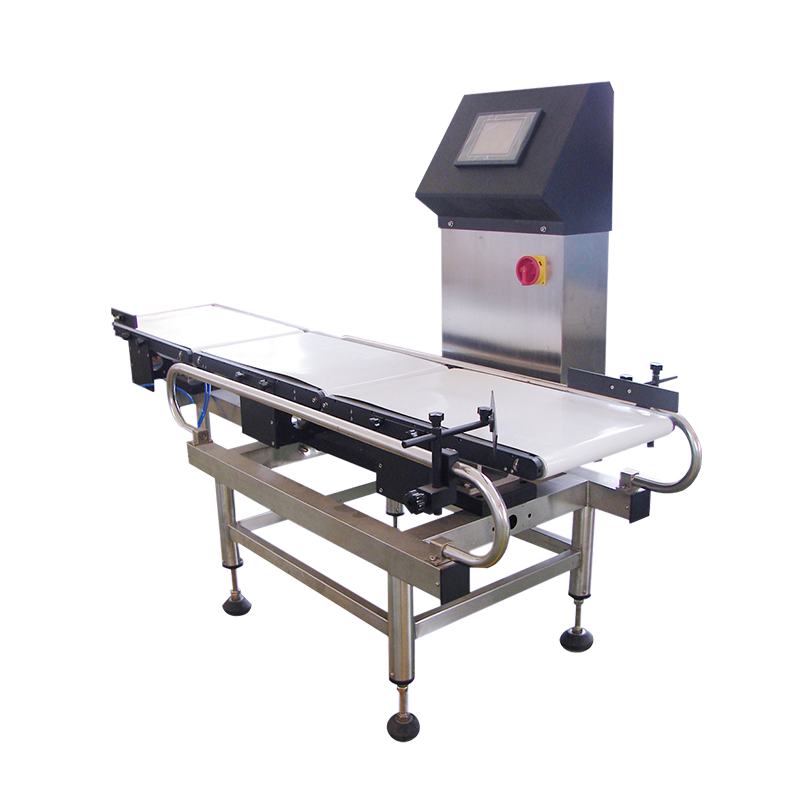
Aguas arriba, un elevador de cangilones accionado por cadena entrega el gránulo a la tolva de la máquina empacadora a un ritmo constante. Una estación de descarga de sacos de una tonelada o de sacos pequeños también puede alimentar la línea. A continuación, una controladora de peso y un detector de metales forman la puerta de calidad. La controladora de peso rechaza las bolsas fuera de tolerancia. El detector de metales detecta la contaminación antes de que llegue al estante. En muchas líneas, el producto ahorrado gracias a una corrección de sobrellenado del 0,5% amortiza la balanza en menos de un año.
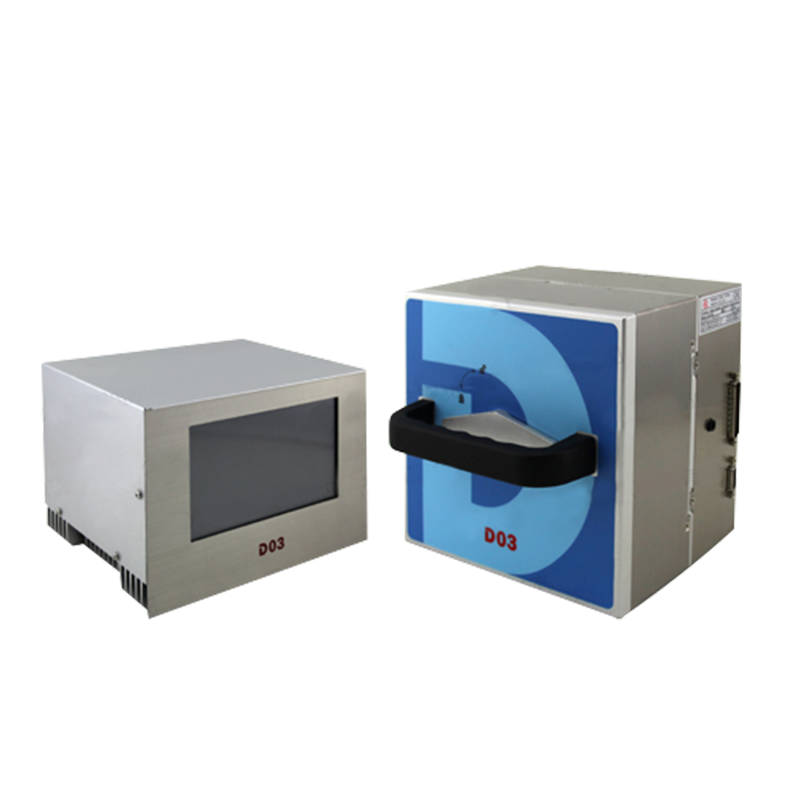
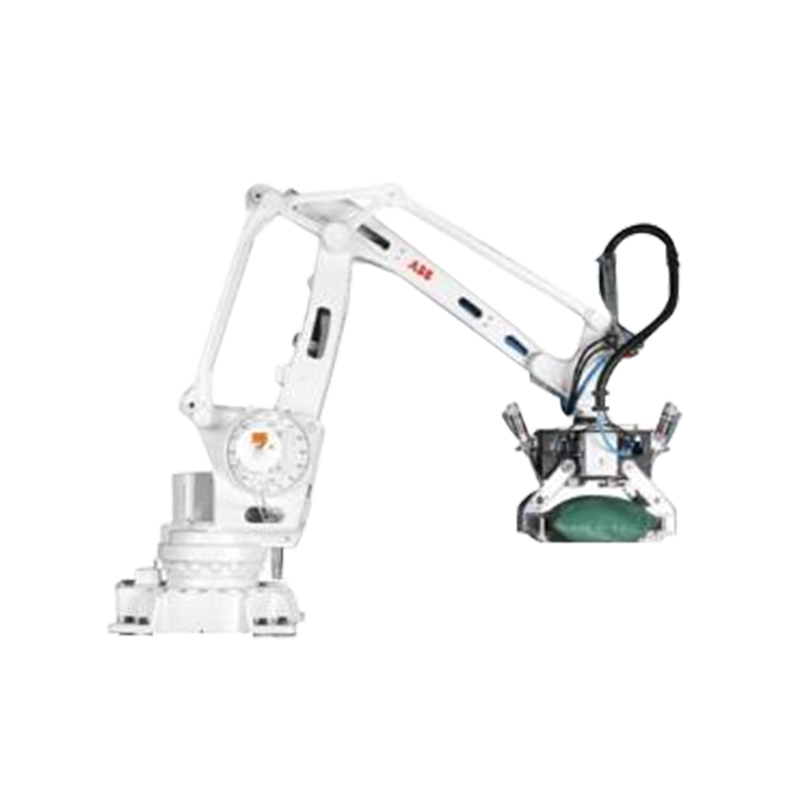
Después de eso, las bolsas terminadas pasan por una impresora de transferencia térmica para obtener datos de lote y vencimiento, una etiquetadora y luego a una máquina estuchadora o un robot paletizador. Cada elemento de esa cadena limita el rendimiento general. La máquina empacadora de gránulos debe funcionar aproximadamente un 10% más rápido que el dispositivo posterior más lento, para que el siguiente paso nunca falte.
Cuando planifique el diseño, deje suficiente espacio para la entrada del producto, la carga de la película y el acceso del operador. Una máquina que está apretada contra una pared es una máquina que tarda el doble en limpiarse o ajustarse. Un plano de planta simple que lleva el flujo de producto en una dirección es más fácil de monitorear y más seguro de operar.
Qué verificar antes de firmar la orden de compra
Las especificaciones del folleto le cuentan parte de la historia. Los fallos vienen por detalles que no están en el folleto. Confirme estos puntos con el proveedor antes de comprometerse:
- Rango de ancho de bolsa. La máquina debe cubrir sus tallas actuales y las dos tallas siguientes que planea agregar.
- Control de temperatura del sello. Un controlador PID con un relé de estado sólido mantiene estable la fuerza del sello durante un turno de 12 horas.
- Sorteo de película servo. Un sistema servo evita que la película se estire y mantiene constante la longitud de la bolsa.
- Piezas de cambio. Compruebe si un cambio de tamaño requiere un cambio de tubo de formación completo o simplemente un ajuste rápido.
- Capacidad de limpieza. La construcción de acero inoxidable y los paneles con clasificación IP66 valen la pena en entornos alimentarios y de lavado.
- Piezas de repuesto. Pregunte por los plazos de entrega para correas de extracción de películas, resortes de mandíbula y sensores. Una espera de 30 días por una correa equivale a una parada de producción de 30 días.
Finalmente, ejecute la máquina con su producto real. Envía 50 kg de tu gránulo en el estilo de bolsa que utilizarás. Ejecute al 80% y 100% de la velocidad nominal y mida la distribución del peso de 500 bolsas. El vendedor hablará de velocidad. Los datos de peso le informarán sobre la precisión. Si el proveedor rechaza una prueba, esa negativa es el dato más importante que recopila.
También está la cuestión del servicio post entrega. Verifique quién contesta el teléfono cuando la máquina se detiene a las 2 a. m. Confirme si el proveedor almacena repuestos localmente o tiene que enviarlos por avión. La compra de una máquina no está completa hasta que el sistema de soporte esté implementado.
Al final, una máquina envasadora automática de gránulos es un sistema de dosificación de precisión que sirve para fabricar bolsas. La máquina adecuada se adapta a la densidad real de su producto, el estilo de su bolsa y el rendimiento de su turno. Consiga el principio de dosificación correcto y mantenga estables los parámetros del sello, y el resto de la línea seguirá. Si todavía estás comparando opciones, un Guía práctica para elegir una máquina envasadora automática de gránulos. cubre los puntos de decisión con más profundidad.


 English
 عربى
عربى


Contáctenos